

Understanding how these medications work, how they affect your hormones, and why timing matters
Many women have questions about the difference between the abortion pill vs birth control. With so much information online, it can be confusing to understand how these medications work and why they are used for different reasons.
While both involve medications that affect the reproductive system, birth control pills and the abortion pill are not the same thing. They are used at different times, work in different ways, and affect your hormones differently.
Understanding the difference can help you make informed decisions about your health and your pregnancy.
If you think you may be pregnant, a pregnancy test is an important first step in understanding your situation. Confirming your pregnancy can help you get accurate information about your next steps.
Think You Might Be Pregnant?
The first step is getting accurate information. Community Pregnancy Center provides no-cost pregnancy testing and ultrasounds to help you understand your situation before making a decision.
What is Birth Control and How Does it Work?
Birth control pills are designed to prevent pregnancy before conception occurs.
Most birth control pills contain synthetic versions of the hormones estrogen and progestin. Some contain only progestin.
These hormones work in several ways:
- Preventing ovulation: The release of an egg from the ovary is delayed or prevented.
- Thickening cervical mucus: This makes it more difficult for sperm to travel through the cervix.
- Changing the uterine lining: This creates changes in the uterus that reduce the likelihood of pregnancy.
When taken correctly and consistently, birth control pills can be an effective way to prevent pregnancy.
How Does Birth Control Affect Your Hormones?
A common question is:
“How does birth control affect your hormones?”
Birth control pills work by introducing synthetic hormones into the body to influence the reproductive cycle.
Because hormones affect many areas of the body, some women may experience side effects, including:
- Nausea
- Breast tenderness
- Headaches
- Mood changes
- Spotting between periods
- Changes in menstrual bleeding
Every woman’s body responds differently to hormonal medications. If you have questions about birth control, a healthcare provider can help you understand your options and what may work best for your health.
What Is the Abortion Pill?
The abortion pill is not a form of birth control.
The term “abortion pill” usually refers to a medication abortion using two medications:
- Mifepristone
- Misoprostol
These medications are used after pregnancy has already begun.
Unlike birth control, which works to prevent pregnancy, medication abortion is intended to end an existing early pregnancy.
How Does the Abortion Pill Affect Your Hormones?
The abortion pill affects hormones differently than birth control.
The first medication, mifepristone, works by blocking the effects of progesterone.
Progesterone is a hormone naturally produced by the body that plays an important role in supporting pregnancy. It helps maintain the uterine lining and supports the early pregnancy environment.
When progesterone activity is blocked, the pregnancy can no longer continue developing.
The second medication, misoprostol, causes the uterus to contract and empty its contents.
This process can involve:
- Cramping
- Bleeding
- Passing blood clots or tissue
- Nausea
- Diarrhea
- Fever or chills
Every person’s experience can be different, and understanding what to expect is an important part of making an informed decision.
Why Does Timing Matter?
Timing is one of the biggest differences between birth control and the abortion pill.
Birth control is used before pregnancy occurs.
The abortion pill is used after pregnancy begins.
Before taking any medication related to pregnancy, it is understand your situation. A pre-abortion screening can provide important medical information before making a pregnancy decision. At this appointment you’ll learn:
- Am I actually pregnant?
- How far along is the pregnancy?
- Is the pregnancy located inside the uterus?
A pregnancy test can confirm that pregnancy hormones are present, but it cannot provide all of this information.
Why Is an Ultrasound Important Before Making a Pregnancy Decision?
An ultrasound provides information that a pregnancy test cannot.
An ultrasound can help determine:
- How far along the pregnancy is
- Whether the pregnancy is located inside the uterus
- Whether the pregnancy appears to be developing
This information matters because some pregnancies require different medical care.
For example, an ectopic pregnancy occurs when a pregnancy develops outside the uterus, most commonly in a fallopian tube. Medication abortion does not treat an ectopic pregnancy because the pregnancy is not located inside the uterus.
Understanding what is happening inside your body can help you make informed decisions about your next steps.
Why Understanding Your Medication Matters
Every medication has a purpose.
Before taking any medication, it is important to understand:
- What it does
- Why it is being used
- How it affects your body
- What questions you should ask
The abortion pill and birth control pills are not the same medication.
Birth control is designed to help prevent pregnancy.
The abortion pill is designed to end an existing early pregnancy.
Knowing the difference allows you to seek accurate information and make decisions based on your individual situation.
Frequently Asked Questions
Is the abortion pill the same as birth control?
No. The abortion pill and birth control are not the same medication and are used for different purposes. Birth control is designed to help prevent pregnancy before it happens, while the abortion pill is used after pregnancy has already begun.
Can birth control pills end an existing pregnancy?
No. Birth control pills are designed to prevent pregnancy before it occurs. They do not end an existing pregnancy.
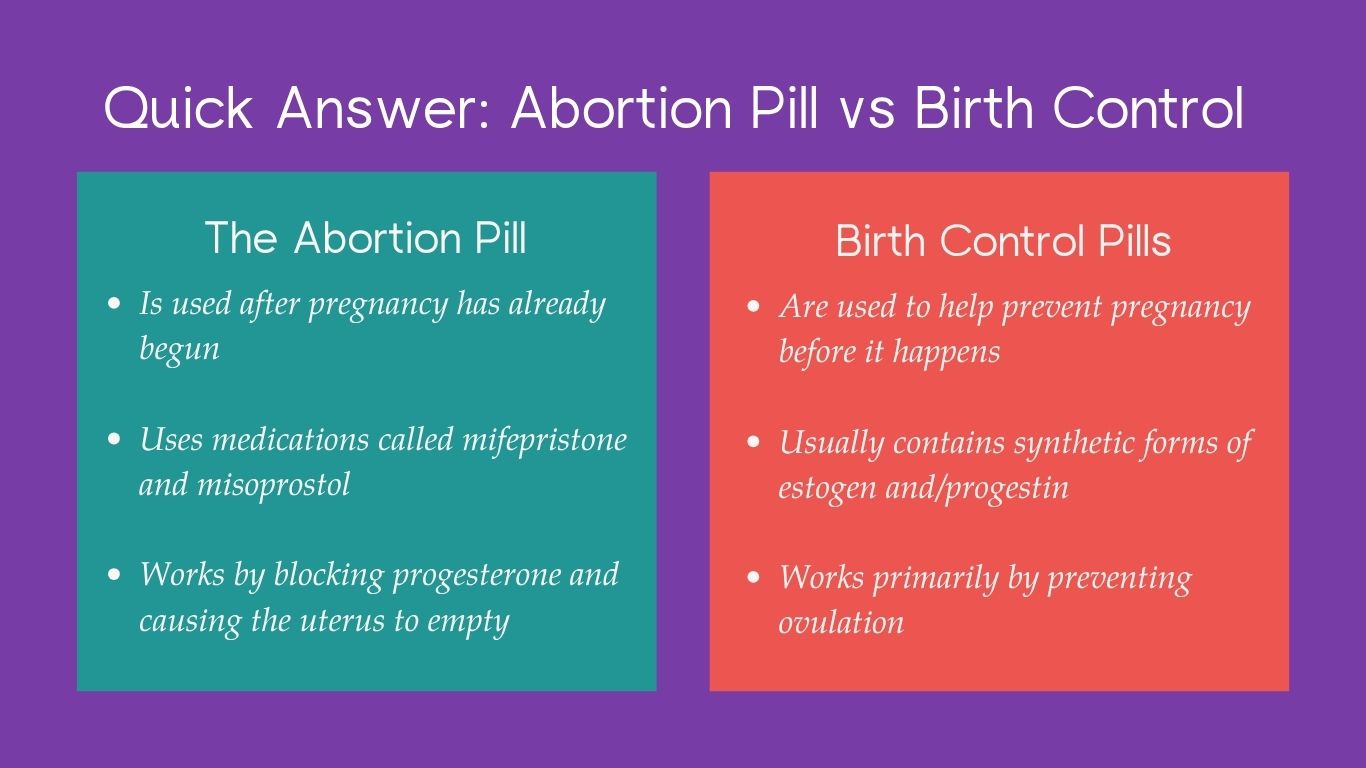
How is the abortion pill different from birth control?
The biggest difference is when they are used and how they work.
Birth control:
- Helps prevent pregnancy
- Works before pregnancy occurs
- Often uses hormones like estrogen and/or progestin to prevent ovulation
The abortion pill:
- Is used after pregnancy begins
- Uses medications called mifepristone and misoprostol
- Works by blocking progesterone and causing the uterus to empty
How does the abortion pill affect your hormones?
The abortion pill affects hormones differently than birth control. Mifepristone blocks the action of progesterone, a hormone that helps support pregnancy. Misoprostol then causes the uterus to contract and empty its contents.
Do I need an ultrasound before taking the abortion pill?
An ultrasound is an important tool for understanding a pregnancy. It can provide information about how far along the pregnancy is and whether the pregnancy is located inside the uterus.
A pregnancy test confirms pregnancy hormones are present but does not provide this additional information.
Can the abortion pill treat an ectopic pregnancy?
No. The abortion pill does not treat an ectopic pregnancy. An ectopic pregnancy occurs when a pregnancy develops outside the uterus, most commonly in a fallopian tube. Because the pregnancy is not inside the uterus, medication abortion does not resolve it.
If you have symptoms such as severe one-sided abdominal pain, shoulder pain, dizziness, fainting, or heavy bleeding, seek medical care immediately.
Need Answers About Your Pregnancy?
Every medication has a purpose.
Before taking any medication, it is important to understand:
- What it does
- Why it is being used
- How it affects your body
- What questions you should ask
The abortion pill and birth control pills are not the same medication.
Birth control is designed to help prevent pregnancy.
The abortion pill is designed to end an existing early pregnancy.
Knowing the difference allows you to seek accurate information and make decisions based on your individual situation.
A positive pregnancy test can bring a lot of questions. You deserve accurate information, a safe place to ask questions, and support as you consider your next steps.
Community Pregnancy Center provides no-cost pregnancy testing, limited obstetrical ultrasounds, pre-abortion screening, and pregnancy options information.
Still have questions? Our team is here to provide accurate information and compassionate support.
References
- American College of Obstetricians and Gynecologists (ACOG). Combined Hormonal Birth Control: Pill, Patch, and Ring.
- Centers for Disease Control and Prevention (CDC). Contraception and Birth Control Methods.
- U.S. Food and Drug Administration (FDA). Mifeprex (mifepristone) Information.
- American College of Obstetricians and Gynecologists (ACOG). Medication Abortion Up to 70 Days of Gestation.
- Mayo Clinic. Birth Control Pill FAQ.
- Mayo Clinic. Ectopic Pregnancy: Symptoms and Causes.